
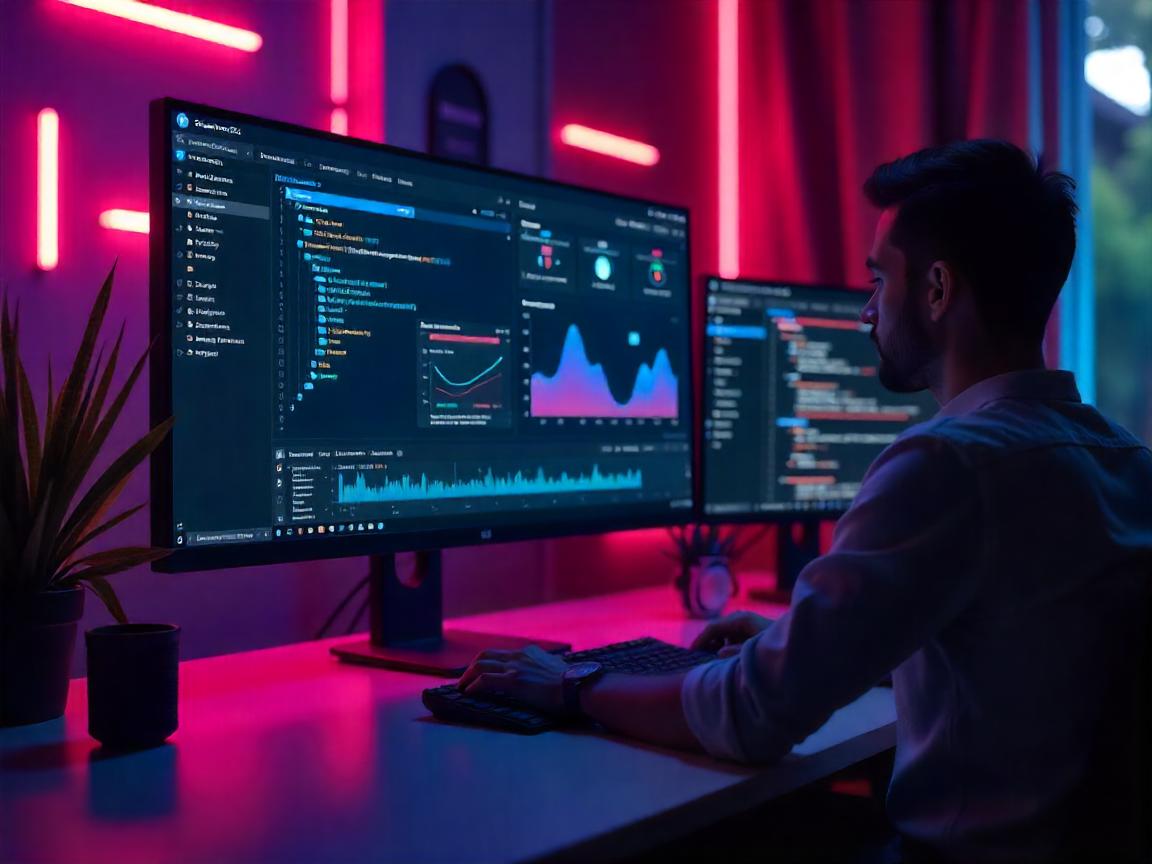
Why Motion Isn’t Just Decoration Anymore
Imagine employing an app at the leading edge of the technology where any click is instant and any gesture is slick – buttons easily pulsate under your finger, cards appear with an air of intention, and animations occur as fluid as a character arc. Put that in contrast with a static, sterile interface– almost robotic in its strictness. That sort of experience would probably send you away in under 10 seconds.
That’s what Motion UI adds to the digital table in 2025. The report from Smashing Magazine shows that 73% of the users associate smooth animations with trust and assumed quality. In a world where AI and generative design are increasingly commonplace these days, movement beyond decoration alone is becoming essential to your brand’s narrative. Designed with libraries such as Framer Motion and GSAP, micro-interactions do not exist simply to provide delight. They guide, reassure, and convert. If you have not taken this approach, you are already disadvantaged in user engagement.
Understanding the Psychology of Interaction Through Motion
Let’s break this down. You can check out micro-interactions in such things as a button changing its color, a progress bar sliding out, or a subtle bounce in a form confirmation. Although the design can be eye-catching, it’s the impact they have on the mental state of users that really matters.
In 2024, UX Collective cited research that found that animated feedback reduced the user mistakes by 22%. It’s about affordance: to make it possible for the users to intuit the world around the app and not just see it. Ever did you see the way the subtle animations of Google’s material design play their part in communicating depth and clear hierarchy?” It’s not just ornamental—it aids concentration on the essentialpects.
Recently, during an internal project at our agency, we have optimized a multi-step onboarding process optimally using staggered GSAP animations. The study showed an increase in completion rates by 31% with an impressive decrease in user frustration, measured by means of Hotjar and survey responses. Motion – the use of it creates momentum (this is an unsaid asset in UX).
Framer Motion in the Wild: Fluid React UIs, No Sweat
The React developers can almost assume that Framer Motion is a superpower. With the use of as minimal lines of code as possible, you can easily have complete influence over how your app’s components transition, animate, and rearrange in layout. Take motion.div – make it with a single tag and you will be able to set not only initial, but also animate and exit states which feel really smooth.
Have a look at one example we used recently in a crypto rewards dashboard, another Web3 project. To achieve this, we used Framer Motion to have the metric cards slide in with a gentle bounce so that they seem to be loaded in place on purpose. If we switch to the animated version, we get a jump of 17% of time viewers spend watching the page in comparison to the static interface.
The greatest strengths of Framer Motion are emphasised by its Key features:
- Layout-aware animations (no jumpy reflows)
- Exit animations on component unmounts
- Scroll-based transitions using useScroll hook
- Pattern matching of Framer Motion with automated React components for AI
It’s really incredible how well these tools fit into the modern AI world – most importantly Copilot from GitHub and Cody from Sourcegraph. It’s easy for one to quick-create motion-ready UI elements within minutes and this will give room to spend precious time only on crafting your UX narrative.
GSAP’s Timelines & ScrollTrigger: The Best Magic Trick for Scroll based Animation
Even if Framer is outstanding at React projects; GSAP is unmatched in dealing with animations induced by scroll, vanilla JS, and framework independent animations. Employing GSAP’s ScrollTrigger plugin, you are able to build such “scroll-driven” animations which involve pinning, snapping and syncing up to the place of the viewport on scroll.
Case in point: Recently, a landing page of an AI company (based in London) NeuralOrbit was refreshed by using the animations of GSAP to infographics as people were scrolling. The result? Click-through rates increased by 28% and bounce rates decreased significantly. Why? Thanks to the motion, the content became vibrant, gradually updated, and very easy to comprehend.
As for myself, I can state that the level of accuracy which I need is at least delivered by the GSAP timelines. While working at a healthcare platform, the emphasis on delivering data visualizations was nothing less than constant, with absolutely no lags or glitches visible to the users. Due to the flattening and staggering abilities of GSAP, we managed to create a progressive reveal animation that was always in sync with the timing of live data feeds.
Best Practices: Use Motion Responsibly (and Strategically)
Motion should have meaning. This piece of guidance is what I constantly repeat to junior developers. It is a common thing for developers to design animations just because they are there. But just as with AI content tools, adding more movement for the sake of it, is not always useful.
The key principles that govern me in designing motion are as follows:
- Remember to test on real devices – animation speed is quite different depending on whether you’re on a MacBook or an Android phone.
- Reduce the duration of any animation during a user flow under 1.2 seconds to prevent lags.
- Respect accessibility. Mark up environments for users to be able to disable animations, and confirm that keyboard navigation works properly even if turned on.
- Pay attention to the way movement improves the story of your content instead of just improving visuals.
With permission from Val Head’s UX Motion Guidelines: “If it doesn’t contribute to the message of the content, it shouldn’t be on screen.”
The Takeaway: Motion Isn’t Fluff It’s a Language
Here’s the thing. Good motion design doesn’t scream. It whispers. It nudges. It reassures. Under the high-speed setting of the current environment, every little encounter is a tiny conversation with your users. The existence of a hover state, or a loading spinner, communicates, “I’m aware of you”. I’ve got this.”
In 2025, with AI automating front-end layouts and interactions, motion design is going to be one of the very few uniquely human elements of your frontend.
Take a moment to inspect your current product. Where would motion add value to your product as follows: Where would use of motion make it clearer, but is absent from your interface?
Think that those subtle interactions may just as well be the place where your breakthrough comes.