
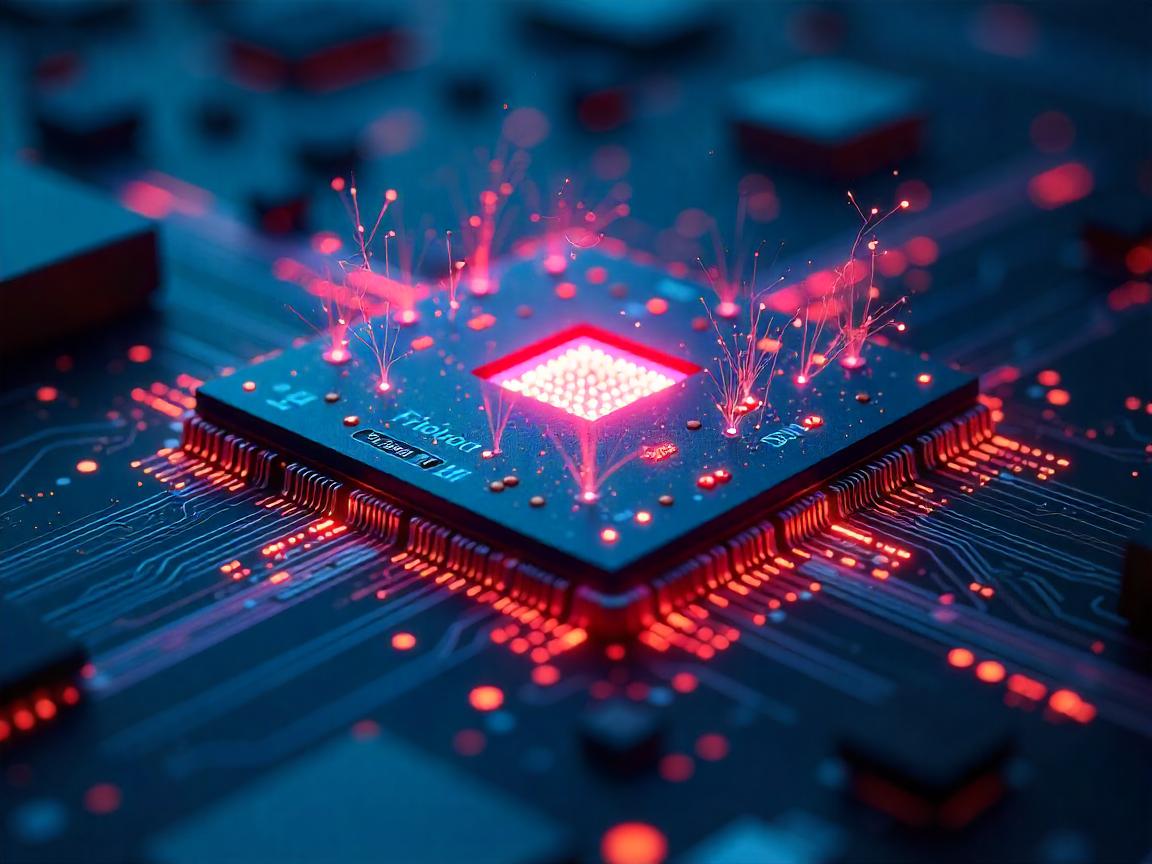
When Machines Think Like Us
As of now, imagine a computer that could understand and learn information like a human brain, constantly readjusting and working on very low power. This isn’t science fiction; There arises a massive growth and development of neuromorphic computing. Neuromorphic systems, which simulate the CPU’s neural networks, are set to threw AI into a paradigm shift in efficiency and flexibility boundaries.
Decoding Neuromorphic Computing
In essence, neuromorphic computing attempts to emulate the brain ‘s neural networks using the electrical circuits. Conventional Computing systems process information in a linear way but the brain works in parallel to process huge volumes of data therefore allowing for quick judgments, and adaptations. Intel’s Loihi 2 uses spiking neural networks (SNNs), similar to brain communications, for dynamic, real-time processing and continuous learning.
Intel launched the Hala Point system in 2024, equipping it with 1,152 Loihi 2 chips that together contain 1.15 billion artificial neurons and 128 billion synapses. Due to the fact that this system has 20 quadrillion of operations per second, this system reflects an obvious increase in AI processing.
Real-World Applications: From Labs to Lives
The uses of neuromorphic computing extend much further than laboratory applications. it’s achieving practical results in various industries:
- Healthcare: Through Akida processor, Onsor Technologies uses smartglasses that through EEG analysis, can efficiently predict epileptic attacks. Smartglasses, which include EEG sensors, analyze the brain signals in real-time to project seizure taking with 95 percent or more accuracy.
- Edge AI: Akida’s use in the M.2 form factor also allows for robust power-efficient computing at the edge to propel autonomous cars and industrial automation technologies forward.
- Human-Computer Interaction: The event-based vision sensors from Prophesee and the Akida 2 processor from BrainChip were demonstrated at Embedded World 2025 for gesture recognition, with up to state-of-the-art AR/VR applications that have low latency and consumption power.
Expert Insights and Ethical Considerations
Dr. M. Anthony Lewis, CTO at BrainChip, reveals revolutionary powers of neuromorphic computing:
Using event-based vision sensors for edge detection and track them with unprecedented efficiency, precision, and low power solves a critical problem for developers of AI and offers a variety of opportunities in many areas.
However, combining the biological parts into computing systems poses serious ethical issues. The presence of human neurons and silicon technology in Cortical Labs’ CL1 provides an apparent example of the crossroads of biological and artificial systems. Problems relative to synthetic intelligence and consciousness have begun to arise, despite the rarity of these benefits in disease research and pharmaceutical development.
Conclusion: The Brain-Inspired Horizon
In the case of AI, at the fore of AI, neuromorphic computing enables the interoperability of biological intelligence and electronic processing. As we develop these technologies, we have to focus on how to introduce sound ethical frameworks in line with efforts to enhance them. Developing machines that think like humans is not simply a matter of replicating neural anatomy – we are responsible to think about and live up to the ethical commitments that those capacities pose.